When to apply to US universities: a Ghanaian timeline
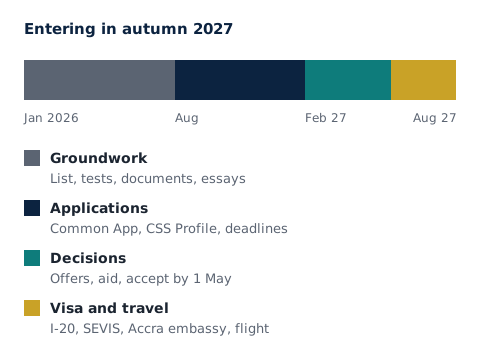
Start about eighteen months before your first term. For autumn 2027 entry, you build your list and sit any tests in early 2026, write your essays in June and July, and submit applications and aid forms between November 2026 and January 2027. You then handle offers, the I-20 and your visa between March and July 2027.
When should a Ghanaian student start applying to US universities?
Start about eighteen months before your first term. For autumn 2027 entry, you start the groundwork in early 2026. Your applications go in from November 2026, and your visa and travel run into the summer of 2027.
That sounds early, but it is how long the process takes when you need financial aid. Your family needs a year of documents for the aid forms. You must register for tests months ahead. And you need to research your list before any essay is worth writing.
What should I do in the year before I apply?
Do three things, from about January to May of SHS 2:
- Build your list. Find universities that meet full need for international students, and check each one's aid page. Our guide to choosing universities that fund you sets out the checks.
- Decide on tests. Find out which of your universities require or recommend the SAT. Check whether you need TOEFL, IELTS or another English test. Register early, because international SAT centres fill quickly.
- Do well in school. Universities will see your SHS 2 and early SHS 3 results. Nothing else on this page matters more.
What should I do in the summer before?
Write. Get your essays done in June and July, because once SHS 3 starts you will have little time.
- Your personal statement. The Common App essay prompts for 2026-27 are the same seven as the year before. You can start before the application opens. The limit is 650 words.
- Your activities. List what you do outside class, with hours and roles, while you still remember the detail.
- Your family's documents. Ask your parents to start gathering the year's payslips, statements and records the aid forms need. Our checklist of CSS Profile documents for parents lists them.
The Common App opens on 1 August. Accounts roll over, so you keep anything you started earlier.
What should I do between August and December?
Fill in your applications, start your aid forms and meet the early deadlines. These are your busiest four months.
The CSS Profile is the aid form most private universities use. IDOC is the College Board service where you upload the documents behind your Profile. Early Decision is a binding early round; Early Action is a non-binding one.
- August
The Common App opens. Enter your details, activities and essay. Sit the SAT if you need it.
- September
Ask your teachers and counsellor for recommendations and your school transcript. Finalise your list and decide on any early round.
- 1 October
The CSS Profile opens. Start it the same week, from your family's documents.
- 1 and 15 November
Early Decision and Early Action deadlines. Many universities want aid forms by these dates too. IDOC opens about a week after you submit each Profile.
- Late November
Request every school document you need for January before the Christmas break.
- Mid-December
Many universities release early results. Finish your regular applications the same week, whatever your result.
Our guide to US application deadlines covers the rounds and dates in detail. It also explains why a Common App deadline falls earlier in Ghana than in New York.
What should I do between January and April?
Meet the regular deadlines, keep your aid file moving, then compare your offers.
- 1 to 15 January
Regular Decision deadlines, with aid forms. Submit a few days early.
- January to March
Upload your IDOC documents and answer any aid office questions. Send your mock and midyear results. Do interviews where they are offered.
- Late March to early April
Universities release regular decisions and aid offers.
- April
Compare your aid offers line by line. Ask questions before you accept.
- By 1 May
Accept one offer. Withdraw from the others.
If you are still in SHS 3, you sit the WASSCE in this period, from April to June. Our guide to applying before WASSCE results explains how the two calendars fit.
What should I do between May and August?
Get your paperwork done, then travel, in this order:
- Proof of funds and the I-20. The I-20 is the document your student visa depends on. The university issues it once it has your aid offer and proof of how you will pay anything the aid does not cover.
- The SEVIS fee. Pay the $350 at least three business days before your visa interview.
- The visa interview at the US Embassy in Accra. Book it as soon as you have your I-20, because summer appointments fill.
- Your WASSCE results. WAEC releases them in August. Send them to the university as it asks.
- The flight. Time it to your university's arrival date for international students.
How does the plan change if I have already finished SHS?
The dates stay the same, and one thing gets easier. Your WASSCE results are already out, so universities see your full record from the start. You have no August rush to send results.
What changes is how you fill the year. Admissions officers will ask what you did between SHS and university, so make it count. Work, volunteer, teach younger students, or take a course or do a project. Write down your hours and responsibilities as you go, because they become your activities list.
You can also start the groundwork sooner. If you finished SHS in the summer, you can build your list and sit any tests in the autumn. You can still apply in the same cycle as students a year younger.
What if I am starting late?
You can still apply for Regular Decision in January if you start in October. Work in this order:
- Your list. Eight to twelve universities that meet full need for international students, checked one by one.
- Your aid forms. The CSS Profile or the free alternatives some universities accept, and your family's documents.
- Your essays. Your personal statement first, then each university's supplements.
Skip anything that does not move one of those three forward. It is better to miss an early round you are not ready for than to rush it.
What should I do this month?
Find where you are on the timeline and do the next thing on it. In SHS 2, start your list. In the summer, write. In the autumn, open the CSS Profile the week it opens.
You and your family can do all of this together. If you would like someone to plan the eighteen months with you, you can book a call with us.
Questions people ask
When should a Ghanaian student start preparing for US universities?
Start about eighteen months before your first term, which for most students is during SHS 2. That gives you time to build a list, sit any tests and gather the documents the aid forms need. The deadlines then fall in November and January of SHS 3.
When does the Common App open?
It opens on 1 August each year. For autumn 2027 entry, it opened on 1 August 2026. Accounts roll over, so you keep any work you started earlier. The essay prompts for 2026-27 are the same as last year's.
When should I take the SAT?
If your universities require or recommend it, sit it first in the spring or summer before your application year. That leaves the autumn dates for a second attempt. International test centres fill early, so register the day registration opens.
Is it too late to apply if I am starting in October?
No, you can still make Regular Decision in January if you move quickly. You will have less choice of early rounds and test dates. Work on your list, your aid forms and your essays, in that order.