Transferring from a Ghanaian university to the US
You can, but funding is the hard part. If you have earned university credit since finishing SHS, most US universities will treat you as a transfer applicant. Many give international transfer students no need-based aid, though some, such as Columbia, meet full need for transfers regardless of citizenship. Build your list from universities that fund international transfers, and keep your grades strong where you are.
Can I transfer from a Ghanaian university to the US?
Yes, but funding decides whether it is realistic. US universities accept transfer students from abroad, including from Ghanaian universities, and the Common App has a transfer version. The problem is aid: many US universities that fund international first-year students give nothing to international transfers.
So the first question is not "can I get in?" but "which universities will fund me as a transfer?" Start from that list, and the rest follows.
Am I a transfer or a first-year applicant?
Usually a transfer, if you have taken university courses for credit since finishing SHS. Stanford, for example, says students who have completed courses for credit in a degree programme after secondary school must apply as transfers. Each university sets its own definition.
The difference matters. Transfer admission is often more competitive at selective universities, and aid for international transfers is much scarcer. If you have only been admitted to a Ghanaian university, or have not yet earned credit, check whether you can still apply as a first-year student. Our guide to a gap year after WASSCE covers applying during a year out.
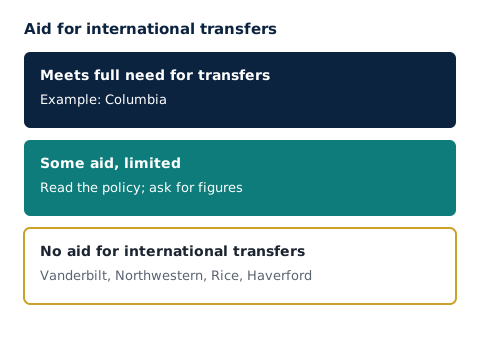
Which universities fund international transfers?
Policies vary widely, and they change. Three groups:
| Policy | Examples | What it means |
|---|---|---|
| Meets full need for transfers | Columbia | Admitted transfers are funded regardless of citizenship |
| Some aid, limited | Varies | Read the policy and ask for figures |
| No aid for international transfers | Vanderbilt, Northwestern, Rice, Haverford | Only possible if the family can pay in full |
Read each university's international aid page and search for the word "transfer". If it is unclear, email the aid office and ask directly: "Do you offer need-based aid to international transfer students?" Our guide to universities that meet full need is a starting point, but check the transfer policy for each one.
What do I need to apply?
More documents than a first-year applicant:
- The Common App for transfer, or the university's own transfer application.
- Your university transcript, official, from your Ghanaian university's registry.
- Your WASSCE results and SHS transcript, because many universities still want them.
- A college report and a mid-term report, completed by your university, often by the registry or a dean.
- Recommendations, usually from university lecturers.
- Essays, including one on why you want to transfer.
- The aid forms, such as the CSS Profile, where the university funds transfers.
Start the registry requests early. Ghanaian university registries can be slow, and a missing transcript can hold up the whole application. Our guide to transcripts from a Ghanaian SHS covers the SHS side.
How much do my university grades matter?
More than anything else in a transfer application. Your university results show how you handle degree-level work, which is exactly what a US university wants to know. A strong CWA or GPA in demanding courses carries the application. A weak first year is hard to overcome, though a clear upward trend helps.
US readers may not know how your university grades. Ask your registry whether it issues an explanation of its grading scale with the transcript, and if it does not, include a short, factual note in the additional information section. Our guide to explaining Ghanaian grades shows how. Keep working hard where you are while you apply: the mid-term report shows your current results, and an offer can depend on finishing the year well.
Will my credits count?
Some may. Each US university reviews your courses and decides which count towards its degree. Courses close to its own, with strong grades, transfer most easily. Some universities limit how many credits you can bring, and some ask you to spend a minimum number of years with them.
Expect to lose some time. A student who has finished two years in Ghana may need more than two further years in the US. Ask each university how it evaluates international credit, and keep your course outlines in case they are requested.
What should I write in the transfer essay?
Why you want to transfer, and why to this university. Be specific and positive: what you want to study that you cannot study where you are, and how this university offers it. Do not criticise your current university. Write about what you have done there and what you want next.
When should I apply?
Most transfer deadlines fall in the spring for entry the following autumn, though some are earlier. Check each one. Plan the year before:
- August to OctoberBuild the list from transfer aid policies. Ask lecturers for recommendations.
- November to JanuaryRequest transcripts. Draft the essays. File the aid forms where needed.
- February to MarchSubmit applications and the mid-term report as each university asks.
- April to MayDecisions arrive. Compare any aid offers.
What about the visa?
It is the same as for any new student. Once you accept an offer and show the funds, the US university issues an I-20, and you apply for an F-1 visa at the US Embassy in Accra. Be ready to explain at the interview why you are leaving a Ghanaian degree and how the new one fits your plans. Our guide to visa interview questions covers what to expect.
Should I stay or transfer?
Weigh three things honestly. Can you get funding as a transfer, or only as a first-year applicant elsewhere? How much time will you lose in credits? And would a strong degree from your current university, followed by a funded master's abroad, serve you as well? For some students the best route is to finish in Ghana and apply for graduate study.
What should I do first?
List ten US universities that interest you, and check each one's aid policy for international transfer students. Cross off any that give no aid unless your family can pay in full. Then check whether you count as a transfer or a first-year applicant at each of the rest.
If you would like help building a transfer list and preparing the application, you can book a free call with us.
Questions people ask
Can I transfer from a Ghanaian university to a US university?
Yes. US universities accept transfer applicants from abroad, and the Common App has a transfer version. You send your university transcript as well as your WASSCE results, and the university decides which credits to accept.
Do I apply as a transfer or a first-year student?
Usually as a transfer, if you have taken courses for credit at a university after finishing secondary school. Stanford, for example, says such students must apply for transfer admission. Check each university's definition, because it decides which application you file.
Do US universities give financial aid to international transfer students?
Some do, many do not. Columbia meets the full need of admitted transfer students regardless of citizenship. Vanderbilt, Northwestern, Rice and Haverford say they give no need-based aid to international transfers. Check each university's policy before applying.
Will my credits from a Ghanaian university transfer?
Some may. Each US university evaluates your courses individually and decides which count towards its degree. You may lose some credit, and some universities limit how much they accept.