F-1 visa interview questions at the US Embassy in Accra
Expect a short interview, often a few minutes, with questions in four areas: your studies, why this university, how you will pay, and your plans after graduating. Answer in your own words, briefly and honestly, and know your own application. Bring your passport, I-20, SEVIS receipt, DS-160 confirmation, aid letter and financial documents. Since 2025, list every social media account on the DS-160 and expect it to be reviewed.
What happens at the F-1 visa interview in Accra?
A short conversation with a consular officer at the US Embassy, often only a few minutes. The officer asks a handful of questions about your studies, your university, how you will pay and your plans, and may look at some of your documents. Then they decide.
You do not need to perform. You need to know your own application, answer honestly in your own words, and have your documents in order. A calm, clear student who understands their plans makes the officer's job easy.
What will the officer ask?
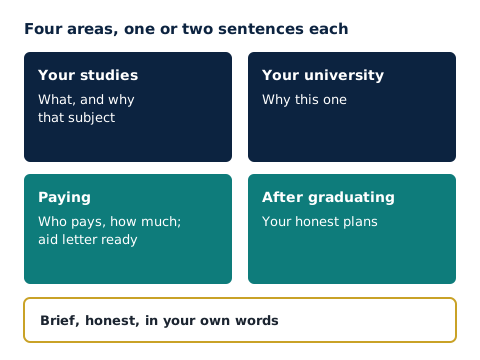
Questions in four areas, in any order:
| Area | Typical questions |
|---|---|
| Your studies | What will you study? Why that subject? |
| Your university | Why this university? Where else did you apply? |
| Paying | Who is paying? How much is your scholarship? |
| After graduating | What will you do after your degree? |
The officer may also ask about your family, what your parents do, or your results. Questions vary, and no list is complete. The point is not to memorise answers but to understand your own plans well enough to explain them.
How should I answer?
Briefly, honestly and specifically. Three habits help:
- Answer the question asked, in one or two sentences. If the officer wants more, they will ask.
- Be specific. "I will study computer science because I built a small app for my school's library and want to learn to build larger systems" says more than "I love technology".
- Use your own words. Officers hear rehearsed answers every day. A natural answer that is a little rough beats a polished script.
Speak clearly, look at the officer, and stay calm if you are asked to repeat something. Nervousness is normal; officers are used to it.
How do I explain who is paying?
Clearly, with figures. If you have a scholarship or aid, say how much it covers and what your family pays, and have the aid letter ready. If your family pays part, know where the money comes from: salaries, a business, savings. Our guide to explaining your scholarship covers this in detail.
How do I talk about my plans after graduating?
Honestly and simply. Student visas are for study, and officers want to understand your plans. Talk about what you hope to do with the degree, whether in Ghana, in Africa or in your field more widely. If your scholarship carries a commitment to return or give back, say so.
Do not invent plans you do not have. An honest "I want to work in health policy, ideally in Ghana, and I will decide the details as I learn more" is better than a rehearsed speech.
What documents should I bring?
Everything, in order, in one folder:
- Passport, valid well beyond your intended stay.
- I-20, signed.
- SEVIS fee receipt.
- DS-160 confirmation page.
- Visa fee receipt and appointment confirmation.
- Admission letter and aid letter.
- Financial documents for anything the aid does not cover.
- Academic records: transcript and WASSCE results.
The officer may not look at most of them. Have them ready anyway.
What about social media?
List every account honestly on the DS-160. Since June 2025, the State Department has asked student visa applicants to disclose the social media accounts they have used and to make them reviewable, and officers may look at them. Leaving an account off the form can be treated as misrepresentation, which is far more serious than anything in the account.
Before you apply, look through your public posts as an officer might. You do not need to delete your history, but you should know what is there.
When should I book the interview?
As soon as you have your I-20 and have paid the SEVIS fee. Wait times at the embassy change through the year and can be long in the summer, so an early booking protects your start date. A student visa can be issued well before your programme begins, but you can usually enter the US only up to 30 days before the start date on your I-20. Check the embassy's current guidance.
How do I prepare without memorising?
Practise talking, not reciting. Ask a parent or teacher to play the officer and ask the four kinds of question in a random order. Answer aloud, then ask them whether each answer was clear and short.
Also know a few facts about your university and course: where it is, what your first-year courses are, how many years the degree takes. An officer may ask something simple to check you know where you are going.
What should I wear, and when should I arrive?
Wear neat, comfortable clothes, as you would for a school prize-giving or an interview. Arrive on time for your appointment, not hours early, and check the embassy's rules on what you can bring inside; phones and bags are often restricted. Plan the journey through Accra traffic with time to spare.
What happens at the end of the interview?
One of three things. The officer may approve the visa and keep your passport to print it, returning it later. They may refuse it, usually under section 214(b), and give you a letter explaining. Or they may need more time or documents, often called administrative processing, and tell you what happens next.
If you are refused, stay calm and read the letter. Our guide to a visa refused under 214(b) explains what it means and how to reapply.
What should I do first?
Write one or two sentences for each of the four areas, in your own words, and practise saying them aloud to a parent or friend. Then put every document in one folder, in the order above.
If you have a question before your interview, send us a message on WhatsApp.
Questions people ask
What questions are asked at the F-1 visa interview in Accra?
Usually questions about what you will study, why you chose this university, how your studies will be paid for, and what you plan to do after graduating. Officers may also ask about your family and your ties to Ghana.
How long is the F-1 visa interview?
Often only a few minutes. The officer may ask three or four questions and look at a few documents. Short, clear answers work best.
What documents should I bring?
Your passport, I-20, SEVIS fee receipt, DS-160 confirmation, visa fee receipt and appointment confirmation, plus your admission letter, aid letter and financial documents. Have them in order so you can find each one quickly.
Do I need to make my social media public?
Since 2025 the State Department has asked student visa applicants to list their social media accounts on the DS-160 and to make them reviewable. Listing every account honestly is required; leaving one out can be treated as misrepresentation.