Generous US colleges Ghanaian families overlook
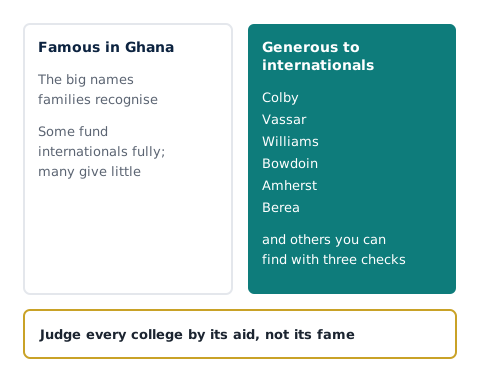
Several of the most generous US colleges for international students are barely known in Ghana. Colby and Vassar meet the full need of the international students they admit. Bowdoin and Amherst are need-blind for internationals. Berea College covers the full first-year cost for every international student it enrols. Put two or three such colleges on your list, after checking each one's international aid page yourself.
Which generous US colleges do Ghanaian families overlook?
Mostly small liberal arts colleges that rarely appear in Ghanaian conversations about studying abroad. Colby and Vassar meet the full need of the international students they admit. Bowdoin and Amherst go further: they are need-blind for international applicants. Berea College covers the full first-year cost for every international student it enrols.
These names may mean little at home. To a Ghanaian student who needs full funding, they can mean as much as any Ivy League university.
What do these colleges offer?
Each makes a clear promise to international students. Here is what each says:
| College | What it offers international students |
|---|---|
| Colby | Meets 100% of demonstrated need for admitted students, including internationals, without loans |
| Vassar | Meets 100% of demonstrated need for four years for admitted internationals who apply for aid when they apply; need-aware in admission |
| Williams | Meets full need for every admitted student; need-aware for internationals |
| Bowdoin | Need-blind for international applicants; meets full need |
| Amherst | Need-blind for international applicants; meets full need |
| Berea | Aid covering tuition, housing, food and fees in the first year for every international student it enrols |
Policies change. Read each college's own international aid page for your year of entry before you rely on this table.
Why are they little known in Ghana?
Because they are small, and Ghanaian families mostly hear about large, famous universities. Most of these are liberal arts colleges with a few thousand students or fewer. They do not train doctors or run big sports teams on television, so their names travel less.
Their size has nothing to do with their aid. What matters is whether a college has chosen to fund international students, and these have. Our guide to liberal arts colleges and universities explains how they differ.
What makes Berea different?
Berea is a work college with a particular mission: it serves students with limited means. It says every international student it enrols receives aid covering tuition, housing, food and fees in the first year. Every student holds a campus job, and international students can work on campus through the college's labour program.
After the first year, international students contribute a modest amount each year, usually from their campus wages. Berea is very different from a selective liberal arts college or an Ivy League university, and it suits a student who wants exactly what it offers. Read about it on its own terms before you apply.
Are they easier to get into?
Not necessarily. Several of these colleges are highly selective, and funded places for international students are limited everywhere. A need-aware college weighs your aid request, as most universities do.
What they add is more real chances. Each is another college where, if you are admitted, you can afford to go. A list with several of them is far stronger than a list of famous names alone. Our guide to building a college list for full aid shows how to balance them.
How do I find more colleges like these?
Run three checks on any college you come across:
- Read its international aid page. Look for "meets 100% of demonstrated need" with international students included.
- Check its Common Data Set. It shows how many international students received aid and the average award.
- Ask its aid office what a family with your income and assets might pay.
Our guide to finding universities that fund you explains each check in detail. Any college that passes all three belongs on your list, however unfamiliar its name.
How do I explain a lesser-known college to my family?
With the numbers and the facts, calmly. Many Ghanaian parents want a name they recognise, and that is understandable: a famous name feels safe. Show them three things:
- What the college offers international students, from its own aid page, in its own words.
- What the family would pay each year, from the net price calculator or an estimate from the aid office.
- What its graduates go on to do, from the college's own outcomes page: graduate schools, employers and countries.
Then compare that with a famous university that gives international students little aid. A funded place at a college the family has not heard of beats an unaffordable place at one they have. Invite your parents to read the pages with you, rather than reporting back. Our parent's guide to studying in the USA is written for them.
Do these colleges ask for anything different?
Mostly not. Most use the Common App and the CSS Profile, with each college's own supplement essays. Two details matter:
- Ask for aid when you apply. Vassar, for example, says international students who want aid at any point in their four years must apply for it at the time they apply for admission.
- Check each college's own forms and dates. Berea, as a work college, runs its admission differently from the others. Read its international applicant pages before you plan around it.
What is it like to be one of few Ghanaians there?
Possibly lonely at first, and often rewarding. At a small college, there may be only a handful of students from Ghana, or none. You will meet students from many countries, and the small size means staff and professors notice when someone is struggling.
Before you apply, ask the admissions office whether there is an African students' association, how many international students there are, and whether you can speak to one. A college that answers those questions warmly is usually a college that looks after its international students.
What should I do first?
Pick two colleges from the table that you had not considered. Read each one's international aid page and its description of student life. If either fits you, add it to your list.
Our free ebook walks through building a funded list from the start, if you would like the full picture.
Questions people ask
Which lesser-known US colleges fund international students?
Several liberal arts colleges, including Colby, Vassar, Bowdoin, Amherst and Williams, meet the full need of the international students they admit. Berea College covers the full first-year cost for every international student it enrols. Check each one's current policy.
Is Berea College really free for international students?
Berea says every international student it enrols receives aid covering tuition, housing, food and fees in the first year. Every student works on campus. After the first year, international students make a modest contribution each year, usually from their campus wages.
Why are these colleges less known in Ghana?
Mostly because they are small and do not appear in the news or rankings Ghanaian families follow. Many are liberal arts colleges with a few thousand students. Their size says nothing about their aid.
Are these colleges easier to get into?
Not necessarily. Many are highly selective, and funded places for international students are limited everywhere. But they add real chances to a list that would otherwise rely on the most famous names.