Student visa refused under 214(b): what Ghanaians can do
A 214(b) refusal means the officer was not satisfied, on that day, that you qualify for a student visa: usually about your plans, your funding or your ties. It is not a permanent ban. There is no appeal, but you can reapply with a new application and fee. Reapply only when something has genuinely changed or can be shown more clearly, and tell your university at once.
What does a 214(b) refusal mean?
That the consular officer was not satisfied, on the day, that you qualify for a student visa. Section 214(b) of US immigration law presumes every applicant intends to immigrate unless they show otherwise. For students, a refusal usually turns on one of three things: your study plans, your funding, or your ties to home.
It is not a ban, and it is not a judgement about your worth. It refers to that application only. Many students who are refused once are approved later, when they apply again with a clearer case.
Why are students refused under 214(b)?
Usually for one of three reasons, though officers often do not spell out which:
| Reason | What the officer may have doubted |
|---|---|
| Plans | Whether you understand your course and university, and why you chose them |
| Funding | Whether your studies are properly paid for, and whether you understand how |
| Ties | Whether you intend to return after your studies, as a student visa requires |
Think back over the interview honestly. Which question did you answer weakly? Which document did the officer look at longest? That is usually where to start.
How is 214(b) different from 221(g)?
A 221(g) is not the same as a 214(b) refusal. Under 221(g), the officer needs more information or more time, often called administrative processing, before deciding. You may be asked for extra documents, and the case continues. The State Department notes that, apart from 221(g) cases, a refused applicant who reapplies must submit a new application and pay the fee again.
Read your letter carefully to see which applies. If it is 221(g), follow its instructions and send what is asked, promptly. If it is 214(b), the steps below apply.
How do I show ties to Ghana as a student?
Honestly, through your life and plans, not through property you do not own. A young student is not expected to own land or run a business. Ties can include:
- Your family in Ghana, and your place in it.
- Your plans for after the degree, if you have them, in Ghana or the region.
- Commitments that come with your funding, such as a scholarship that expects you to return or give back.
- Your history: your schooling, your community, your activities here.
Do not invent ties or plans. An officer who hears a rehearsed promise to "come back and build Ghana" from every applicant is more persuaded by a specific, honest answer about what you hope to do.
Does a refusal affect future visas?
Only if you hide it. Future visa applications ask whether you have ever been refused a US visa. Answer yes, honestly, every time. A past 214(b) refusal is common and does not stop a future approval. Concealing it is misrepresentation, which is far more serious.
Can I appeal?
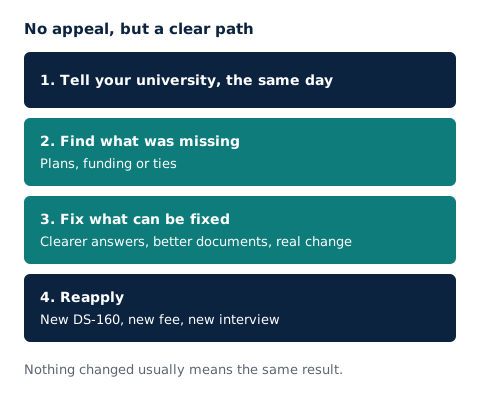
No. The State Department says there is no appeal of a 214(b) refusal. The only route is a new application: a new DS-160, a new visa fee and a new interview. The fee you paid is not refunded.
What should I do first?
Tell your university's international student office, the same day if you can. They see refusals every year and can help: by deferring your start, by issuing an updated I-20 for a later term, or by advising on what to bring next time. Do not wait until term has started.
Then write down, while it is fresh, every question you were asked and how you answered. That record is the most useful thing you have when you prepare to reapply.
When should I reapply?
When something has changed, or when you can show your case more clearly. There is no fixed waiting period, but reapplying with the same answers and documents usually brings the same result. Good reasons to reapply include:
- Clearer funding evidence: a full aid letter, an updated I-20, or stronger documents for the family's part.
- Clearer plans: you can now explain your course, your university and your goals specifically.
- A real change: a new scholarship, a change in sponsor, or other circumstances the officer did not see.
Our guides to the visa interview questions and to explaining your scholarship show how to prepare.
Should I pay someone to fix it?
No. The US Embassy in Accra has warned that no fixer or consultant can guarantee a visa. Anyone who promises a guaranteed approval after a refusal, or offers fake documents, puts you at risk of a far more serious and lasting ineligibility. Prepare your own case honestly, with help from your university and family.
How do we handle it as a family?
Calmly, and without blame. A refusal can feel like a public failure, especially after a celebrated admission. It is not. Officers refuse many qualified students, often after only a few minutes, and many are approved later.
Sit down together, go through what happened, and agree the next step: a reapplication with a clearer case, a deferral, or another route. A student who feels supported prepares far better for a second interview than one who feels ashamed of the first.
What if I am refused again?
Talk to your university about your options. It may defer your place for a year, or you may decide to take up a funded place elsewhere, in Ghana or another country. A refusal does not end your education; it changes its route. Our guide to funded places outside the USA lists the alternatives.
What should I do now?
Email your university's international office today. Then write down your interview, find the weak point, and gather what would strengthen it. Reapply only when your case is genuinely clearer.
If you would like to talk through what happened, send us a message on WhatsApp.
Questions people ask
What does a 214(b) refusal mean?
That the consular officer was not satisfied that you qualify for the visa you applied for. For students, it often relates to plans, funding or ties to home. It refers to that application only.
Can I appeal a 214(b) refusal?
No. The State Department says there is no appeal of a 214(b) refusal. You can reapply with a new DS-160, a new fee and a new interview.
How soon can I reapply after a 214(b) refusal?
There is no fixed waiting period, but reapplying with nothing changed usually brings the same result. Reapply when you can show a real change or present your case more clearly, with better documents.
Will a refusal affect my place at the university?
It can delay your start. Tell the university's international office straight away. Many can defer your start date or issue an updated I-20 for a later term.