Explaining your scholarship at the US visa interview
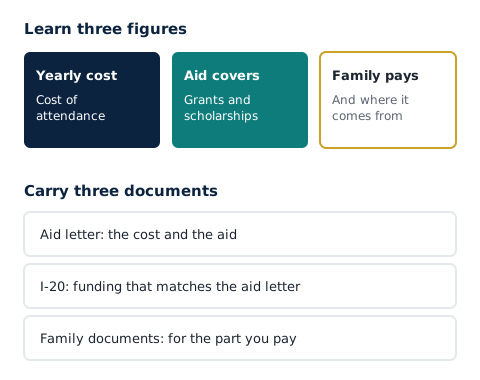
Know three figures by heart: the yearly cost of attendance, how much your aid covers, and what your family pays. Say them simply, in a sentence, and have the aid letter and I-20 ready to show. If your aid is need-based, say the university gives aid based on your family's finances and covers the rest. If your family pays part, know exactly where that money comes from.
How do I explain my scholarship at the visa interview?
With three figures and one sentence. Know the yearly cost of attendance, how much your aid covers and what your family pays. Then say it simply: "My university costs about $90,000 a year. My financial aid covers $86,000, and my family pays the rest from my father's salary."
Officers want to see that your studies are paid for and that you understand how. A student who knows their own numbers, and can show the letter that proves them, answers the money question in seconds.
Why does the officer ask about money?
Because a student visa requires that your studies are properly funded. The officer needs to be satisfied that you can pay for your programme without having to work illegally or leave your course. A clear, documented answer removes that concern.
The question is not a trap, and a scholarship is not suspicious. Many students at the embassy in Accra hold aid from their universities. The officer simply needs to see that the numbers add up and that you understand them.
What three figures should I know?
Learn them from your aid letter and I-20 before the interview:
| Figure | Where to find it |
|---|---|
| The yearly cost of attendance | Your aid letter, and the estimated expenses on your I-20 |
| What your aid covers | Your aid letter: grants and scholarships, and any work |
| What your family pays | The difference, and the family contribution on your aid letter |
Round them sensibly, to the nearest thousand dollars. You do not need every line of the letter, just the three figures that tell the story.
How do I describe need-based aid?
Simply, without jargon. Many Ghanaian students hold need-based aid rather than a named scholarship, and that is common and well understood. You might say: "The university gives financial aid based on my family's income. It covers most of my costs, and my family pays a small part."
If your aid has a name, such as a named merit scholarship, use it. If it is from an outside programme, such as the Mastercard Foundation, say so and have that award letter ready too.
What documents prove it?
Three, in your folder:
- Your aid letter, showing the cost and the aid.
- Your I-20, whose funding section should match the aid letter.
- Your family's financial documents for whatever the aid does not cover: payslips, a bank letter, business records or a sponsor's letter.
Check that the figures agree across all three before the interview. If the I-20 shows a different figure from the aid letter, ask the university to explain or correct it.
How do I explain my family's part?
Know the amount and where it comes from, and say it plainly. A parent's salary, a family business, savings or a relative's support are all normal sources. Bring documents for whichever applies, and be ready to say in a sentence how the family will pay each year.
If the family's part comes from several sources, keep it simple: "My mother pays from her salary as a teacher, and my uncle helps with the flight." The officer may ask to see the documents; have them in order.
What if my aid includes a campus job or a loan?
Include it, accurately. A campus job is money you will earn during the year, not money you have now. A loan is money you will repay. If your aid letter includes either, say so: "My grant covers $84,000. I will earn about $3,000 from a campus job, and my family pays $3,000."
Do not count a job or a loan as a scholarship. If the officer adds up your grant and finds it smaller than "full", the honest version of your answer has already explained why.
What if a sponsor outside the family pays part?
Say who they are, how they are related to you, and what they pay. A sponsor might be an uncle abroad, a church, a company or a foundation. Bring their letter of support, stating the amount, the period and their relationship to you, with evidence of their funds.
The officer may ask why the sponsor is helping. A simple, true answer is best: "My uncle in London has paid my school fees since SHS 1 and has promised to pay for my flights." The same sponsor details should appear on your certification of finances. Our guide to the certification of finances explains it.
Who else might ask about my funding?
The officer at the US port of entry, and your university. When you arrive in the US, the border officer may ask about your studies and may look at your I-20, so carry it and your aid letter in your hand luggage, not in a checked bag.
Your university's international student office will also keep a record of your funding for your immigration file. If your funding changes during your degree, tell them.
What if my figures change after the interview?
Tell the university promptly. If your aid or your family's contribution changes significantly, the university may need to issue an updated I-20 that reflects the new figures. Carry the most recent version when you travel.
What if my aid changes each year?
Say so, simply. Need-based aid is usually recalculated each year from your family's updated figures. You might explain: "My aid is renewed each year based on my family's finances. The university has said it will meet my need for four years." Bring any letter that describes the renewal.
What should I do first?
Take your aid letter and I-20, and write the three figures on a card. Check that they match across both documents. Then practise saying them in one sentence, aloud, to a parent.
If you have a question about your figures before the interview, send us a message on WhatsApp.
Questions people ask
How do I explain my scholarship at the visa interview?
In one or two sentences with figures: the cost of a year, what your scholarship or aid covers, and what your family pays. Then show the aid letter if asked. Clear numbers are more convincing than long explanations.
What if my aid is need-based rather than a named scholarship?
Say so plainly: "The university gives financial aid based on my family's income. It covers most of the cost, and my family pays the rest." Need-based aid is common and well understood.
Does the I-20 show my scholarship?
The I-20 shows estimated costs and how they will be met, including funds from the university. The figures on it should match your aid letter. Check them when the I-20 arrives.
What if my family pays part of the cost?
Know the amount and where it comes from: a parent's salary, a business, savings or a sponsor. Bring documents for it, such as payslips or bank statements, and be ready to explain them simply.