Talking about money with your child before they apply
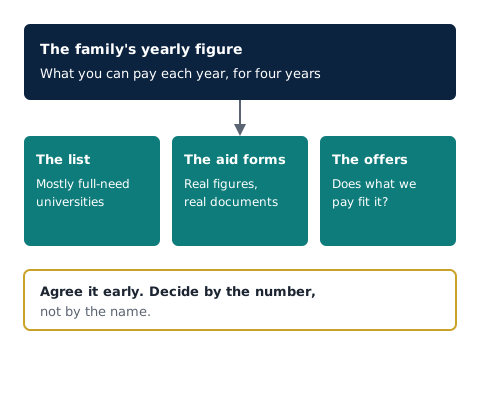
Have the conversation early, before your child builds a list of universities, and end it with one number: what the family can pay each year, for four years, without hardship. Include anyone else who will genuinely contribute. Be honest about the figure, because it shapes the list and the aid forms. Then let your child choose universities that fit it, and agree to talk again when offers arrive.
How should we talk about paying for university abroad?
Early, honestly, and with one number at the end of it: what the family can pay each year, for four years, without hardship. Have the conversation before your child builds a list of universities, so the list can fit the budget rather than the other way round.
Many Ghanaian families leave this talk until offers arrive. By then, a child may have set their heart on a university the family cannot afford. An early conversation prevents that disappointment.
When should we have the conversation?
In the year before your child's final SHS year, before the university list is built. Then again at three moments:
- Before the list
Agree the yearly figure the family can pay.
- Before the aid forms
Gather the documents and fill in the forms together, from real figures.
- When offers arrive
Compare what each offer leaves the family to pay, and decide together.
- Every year after
Renew the aid forms, and talk if the family's situation changes.
What number should we agree on?
What the family can pay each year, for four years, without selling essential assets, falling into debt or taking away from younger children's schooling. Count only money you are sure of: income, savings and firm commitments.
Then multiply by four, and check that the total is something the family can really sustain. A figure that works for one year but not four is the wrong figure.
For most Ghanaian families, this number will be far below the full cost of a US university. That is normal. It is exactly why your child should apply to universities that meet full need for international students, where the aid covers the gap.
Should relatives' contributions count?
Only if they are firm and will last. In many Ghanaian families, uncles, aunts or older siblings abroad help with school costs. That help can be real and generous. But plan around it only if it is confirmed, and if it will continue for four years.
Talk to those relatives directly, before the list is built. Ask what they can give, for how long, and whether they are sure. A promise made warmly at a family gathering is not the same as a commitment. The aid forms may also ask about regular support from outside the household, so report it honestly.
How much should we share with our child?
Enough for good decisions. Your child needs the yearly figure, a sense of what is firm and what is uncertain, and an honest view of what the family can manage. They do not need every detail of the family's accounts.
Many students choose better when they understand the limits. A student who knows the family can pay GH₵30,000 a year looks for universities where that is enough. A student who has been told "don't worry about money" often does not.
What should our child do with the number?
Build a list around it. Universities that meet full need for international students, where the family's calculated contribution is likely to fit the figure, should form most of the list. A few others can be added only with a clear plan for paying the difference.
Our guide to the cost of studying in the USA shows what a year really costs, and our guide to how universities decide what you pay explains how the aid office will reach its own figure.
What if the parents live apart?
Talk with both, if you can. Many universities ask about both parents' finances on the CSS Profile, even when they live apart, so both parents' circumstances may affect the aid. A child caught between two households should not have to carry the money conversation alone.
If one parent cannot or will not take part, tell the aid office early and explain. Universities have processes for this, and some will waive the second parent's information in certain circumstances. Our guide to the CSS Profile for separated parents explains how it works.
What about costs the aid will not cover?
Plan for them in the same conversation. Even a full-need award leaves some costs to the family: the visa and SEVIS fees, often the first flight, warm clothing for the first winter and some personal spending. These come before the first term, when the aid has not yet started.
Put a separate figure aside for them, in addition to the yearly number. A family that has planned for the first flight and the visa fees avoids a scramble in July.
What if our child feels guilty about the cost?
Reassure them, and keep the facts in view. Some students worry that their education will burden the family, and choose less ambitious lists because of it. The point of the yearly number is to remove that worry: if an offer fits the number, the family can manage it.
Tell your child plainly what the family is glad to give, and that the rest is the university's job.
What if the offers do not fit the number?
Choose the offer that does, even if it is not the first choice. A funded place at a good university is a better start than an unaffordable place at a famous one. If no offer fits, look at funded options outside the US, a year in Ghana, or reapplying with a stronger list.
Agree in advance that the family will decide by the number, not by the name. It makes the hardest conversation in April far easier.
What should we do first?
Set aside an hour this week with your child. Agree the yearly figure, write it down, and decide who gathers which documents. Then look at the list of universities together.
If you would like to talk it through first, send us a message on WhatsApp.
Questions people ask
When should parents talk to their child about paying for university abroad?
Before the university list is built, ideally in the year before the final SHS year. The family's budget should shape which universities go on the list, not arrive as a surprise when offers come.
What figure should we agree on?
What the family can pay each year, for four years, without selling essential assets or falling into debt. Include only money you are sure of, such as income and savings, not hoped-for help.
Should relatives' contributions count?
Only if they are firm and will last four years. A promise from an uncle abroad can help, but plan around it only if it is confirmed. The aid forms may also ask about support from outside the household.
Should I hide our finances from my child?
Share enough for good decisions. Your child does not need every detail, but they need the yearly figure and an honest sense of what the family can manage. Many students make better choices when they understand the limits.