Cost of studying in the USA from Ghana: a parent's guide
Before aid, a year at a US university costs an international student roughly $68,000 at a large public university such as Ohio State, and over $90,000 at Michigan or Yale. What you actually pay depends almost entirely on the university's aid. At a university that meets full need, you pay a family contribution worked out from your income, which can be small. Budget separately for visa fees, flights and the other costs that come before the first term.
How much does a year at a US university cost before aid?
Between about $68,000 and $98,000 a year for an international student, at the universities most Ghanaian families look at. That is the published cost of attendance: tuition, housing, food, books and personal costs together.
Three published examples for 2026-27:
| University | What the figure covers | 2026-27 figure |
|---|---|---|
| Ohio State | Full estimated cost for an international student living on campus | $68,054 |
| University of Michigan | Estimated cost for a first-year international student | About $92,000 |
| Yale | Tuition, housing and food (the "term bill"), before books and personal costs | $94,100 |
These figures rise most years, usually by a few per cent. Multiply by four for a degree, and in many Ghanaian homes the conversation ends there.
It should not. The published price is where the calculation starts. It is not what a funded student pays.
What does a Ghanaian family actually pay?
At a university that meets full need, you pay what the university calculates you can afford, and the university covers the rest. At a university that gives international students little aid, you pay close to the published price.
So your choice of university is your biggest money decision, bigger than any exchange rate or fee. Harvard says that from 2025-26, families earning $100,000 or less with typical assets pay nothing at all. A large public university with little aid for international students can cost the same family more than $270,000 over four years.
Our guide to how US financial aid works shows how the university calculates your contribution. Our guide to US universities that meet full need names them.
Why are public universities not cheaper for international students?
Because your child pays the non-resident rate, and that surcharge is the biggest single line on the bill. Ohio State's own breakdown for 2026-27 shows it.
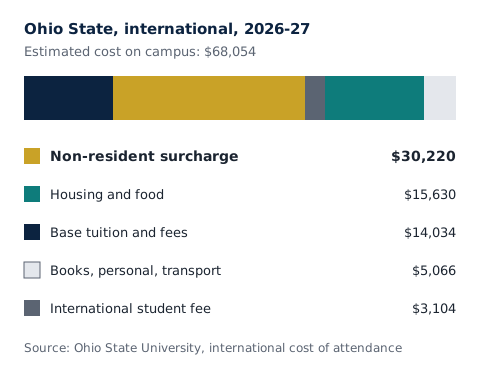
The cheap "state university" price you hear about is the price for residents of that state. An international student pays the surcharge on top. Many public universities also offer international students little or no need-based aid.
Public universities can still be a good choice, and some offer merit scholarships to international students. But compare them on what you would actually pay, not on their name for being affordable.
What costs come before the first term?
Several bills fall due before the aid starts, and they are the costs most likely to come from your own savings. A full scholarship covers the academic year, so these earlier costs often catch Ghanaian families out.
During applications:
- Application fees, one per university, unless the university waives it.
- The CSS Profile fee, one charge for the first university and less for each one after.
- Test fees, such as the SAT, if your child's universities require or recommend it.
After admission:
- An enrolment deposit at some universities. Some waive or cover it for students on full aid, so ask.
- The F-1 visa application fee, $185.
- The SEVIS I-901 fee, $350, paid at least three business days before the visa interview.
- Any further visa fee in force when you apply. A visa integrity fee became law in 2025, so check the US Embassy in Accra's fee page.
- Medical checks and any required vaccinations.
- The flight, unless the university's aid includes travel.
- Clothing for a winter that Accra has not prepared your child for.
Add these up before admissions season starts.
- October to January
Applications, application fees, CSS Profile fees and test fees.
- March to April
Admission and aid offers arrive.
- By 1 May
The usual date to accept an offer. Any enrolment deposit falls due.
- May to June
The university issues the I-20 once you have shown proof of funds.
- June to July
SEVIS fee, visa fee, and the interview at the US Embassy in Accra.
- August
The flight, and the first winter clothes, ideally bought in the US.
What does the I-20 ask us to prove?
That you can pay whatever the aid does not cover for the first year. The I-20 is the document your child's student visa depends on. The university issues it only once it has seen your proof, and the consular officer in Accra may ask to see that proof again.
Universities typically ask for bank statements and, where a parent or sponsor pays, a signed letter promising support. The aid offer itself counts as funding, so a full-need award makes this step simpler.
The catch for many Ghanaian families is the word "liquid". Many universities say property, land and payslips alone do not count as proof of funds, because you cannot spend them on fees. If you own a house and a plot but hold little cash in the bank, you may find the I-20 harder than the aid.
How do we send the money from Ghana to the US?
Through your bank, by international transfer, with documents. Ghanaian banks send fees abroad by SWIFT. For larger amounts they ask for supporting documents, such as the admission letter and the university's invoice.
Two practical points:
- Ask your bank early what it needs. Requirements differ between banks and change over time. A transfer held up by a missing document can miss a payment deadline.
- Plan for the exchange rate. The aid offer and the bill are in dollars, and your income is in cedis. If the cedi weakens between the offer in April and the payment in August, the same dollar bill costs you more cedis.
What costs continue every year?
Your family contribution, which the university recalculates each year, and the costs around it. Many full-need universities ask you to renew the aid application every year. Your contribution can rise or fall with your income.
Around it sit smaller yearly costs. Expect flights home if the aid does not cover them, summer housing or storage, and personal spending, which the cost of attendance only estimates.
Where should we start?
Write down two numbers before you look at a single university. First, what you could pay each year from income. Second, what you could pay once, from savings, for the costs before the first term. Compare universities by the first number, and plan the second.
You can work out both numbers at the kitchen table with the universities' own pages. If you would like the whole process laid out in order, from the first list to the first flight, our free ebook walks you through it.
Questions people ask
How much does it cost a Ghanaian student to study in the USA per year?
Before aid, around $68,000 a year at Ohio State for an international student in 2026-27, and over $90,000 at universities such as Michigan and Yale. At a university that meets full need, you can pay far less. The published price is where the calculation starts. It is not what most funded students pay.
What are the visa costs for a Ghanaian student going to the US?
The F-1 visa application fee is $185 and the SEVIS I-901 fee is $350. You pay both before your child's interview at the US Embassy in Accra. A further visa integrity fee became law in 2025, so check the embassy's current fee page for whether and how it applies when you apply.
How much money do we need to show for the I-20?
Enough to cover whatever the aid does not, for the first year's cost of attendance. Universities usually ask for bank statements and, where a parent or sponsor pays, a signed letter of support. Many say property and payslips alone do not count, because you cannot spend them on fees.
Are public universities cheaper for international students?
Usually not by as much as you expect, and often not at all once aid is counted. International students pay the non-resident rate, which at Ohio State is more than double the base tuition. Many public universities also give international students little need-based aid.