Costs a US scholarship won't cover for Ghanaian students
Even a full scholarship usually leaves some costs to the family, mostly before the first term. Expect to pay the SEVIS fee ($350 as of 2026), the visa fee ($185) and any new visa charges, plus a passport, medical checks, often the first flight, a laptop, warm clothing and cash for the first weeks. Ask your university what it covers, then put the rest in a separate budget.
What costs will a full scholarship not cover?
Usually a group of costs before the first term, and a few during it. Expect to pay the SEVIS fee, $350 as of 2026, the visa application fee, $185, and any new visa charges, plus a passport, medical checks and often the first flight. Add a laptop, warm clothing and cash for the first weeks.
These costs are small next to a year at a US university, but they arrive all at once, in the months before travel, when the aid has not yet started. A family that plans for them avoids a scramble in July.
What costs come before the first term?
The heaviest group, and the one families most often miss:
| Cost | Notes |
|---|---|
| Passport | Renew it if it will expire during your studies |
| Medical checks and vaccinations | Your university's health forms may need several vaccines or tests |
| SEVIS I-901 fee | $350 for F-1 students as of 2026 |
| Visa application fee | $185 as of 2026, plus any new visa charges |
| Travel to the interview | Getting to the US Embassy in Accra, and back |
| The first flight | Sometimes covered by the university; ask |
| Luggage and essentials | Bedding, toiletries, adapters for US sockets |
Check the current fees on the official sites before paying. They change.
Some of these costs can be spread out. Book the medical checks and passport renewal early, in the months after you accept, so they do not all fall in the same few weeks as the visa fees and the flight. A family that starts in April finds July far easier.
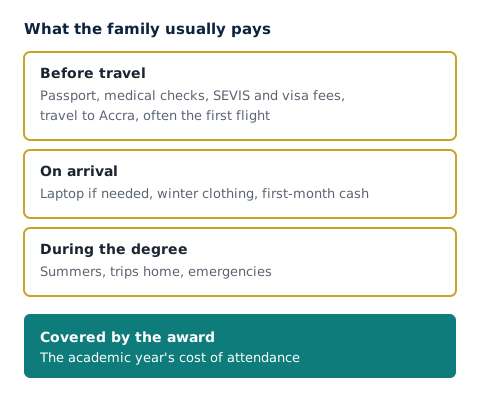
What do I need when I arrive?
A few things that make the first weeks work:
- A laptop, if you do not have a suitable one. Ask whether your university lends or grants one to students with high need; some do.
- Winter clothing, if your university is in a cold region. A good coat and boots are often cheaper bought there, but you need something warm for the journey and first days.
- Cash for the first weeks, for food, transport and small purchases before any stipend or campus wages begin.
- A phone plan in the US, which you will set up after arriving.
What costs come up during the degree?
Three, mainly:
- Summers. Many awards cover the academic year, not June to August. If you stay in the US, housing and food may be yours, unless you have a funded programme, internship or job.
- Trips home. Some awards include a flight a year; many do not.
- Emergencies. A medical cost insurance does not cover, a lost phone, or a family emergency at home.
Ask your aid office what your award includes for each, and plan for the rest.
Can the student earn some of this?
Some of it, once term starts. Students on an F-1 visa can generally work on campus during term, usually up to 20 hours a week, and full time in breaks. Campus wages often cover personal costs, books and some summer expenses.
They cannot cover the costs before arrival, because the student cannot work in the US until they are there and enrolled. Off-campus work is much more restricted. So the pre-travel costs, and the first weeks, have to come from the family or a sponsor.
What about health insurance and medical costs?
Ask whether your award covers the university's health insurance. Many universities require it of international students and bill it separately, and some include it in the aid. Insurance usually covers most medical care, but there can still be small charges for prescriptions or visits.
Before you leave, have a dental check and any routine care you can get at home, and bring a supply of any regular medicine with a doctor's note.
How do we move money to the US?
By bank transfer or card, after comparing costs. Bank transfers from Ghana to the US can take days and carry fees. A card that works abroad is useful for the first weeks. Once the student opens a US bank account, transfers become simpler.
Watch the exchange rate. A cost fixed in dollars can rise in cedis if the cedi weakens, so do not leave the pre-travel payments to the last moment.
How do I find out what my university covers?
Ask the aid office, in writing, before you budget. Useful questions:
- Does the cost of attendance include travel, and how is it paid?
- Is there help with the first flight or a laptop for students with high need?
- Is health insurance included in the award, or billed separately?
- What happens in the summer?
Some universities include travel in the cost of attendance for international students; others give one-off support to students with high need. Our guide to reading an award letter shows where to look in your offer.
How should we budget for these costs?
As a separate fund, set aside early. Add up the pre-travel costs from the table, the arrival items and a cushion for the first month. Then add a yearly figure for summers, trips home and emergencies.
Agree with your family who pays for what, and when. Our guide to the cost of studying in the USA covers the full picture for parents, and our guide to what to do after admission shows when each cost falls due.
What should I do first?
Email your aid office and ask what your award covers for travel, a laptop, insurance and summers. Then list the pre-travel costs from the table, check the current fees, and set the money aside.
If you have a question about costs, send us a message on WhatsApp.
Questions people ask
What costs does a full scholarship not cover?
Usually the costs before the academic year starts: visa and SEVIS fees, the passport, medical checks and often the first flight. Personal items such as a laptop and winter clothing, and summers, may fall outside the award too.
Does a full scholarship pay for my flight?
Sometimes. Some universities include travel in the cost of attendance or help with the first flight for students with high need. Ask your aid office before you book.
How much money should I bring for the first weeks?
Enough for food, transport and small purchases until your campus job or any stipend begins, and for anything not ready when you arrive. Ask your university what students usually need in the first month.
What about the summer?
Many awards cover the academic year, not June to August. If you stay in the US for the summer, housing and food may be yours to pay, unless you have a funded programme or job.