Mastercard Foundation Scholars Program from Ghana
You do not apply to the Mastercard Foundation. You apply to one of its partner universities, such as KNUST, Ashesi or the University of Ghana, and that university selects its own Scholars. The program is for academically strong students from families in real financial need, with a record of leadership and service. Each partner sets its own form and deadline, so the work starts with choosing the partner.
How do I apply for the Mastercard Foundation Scholars Program?
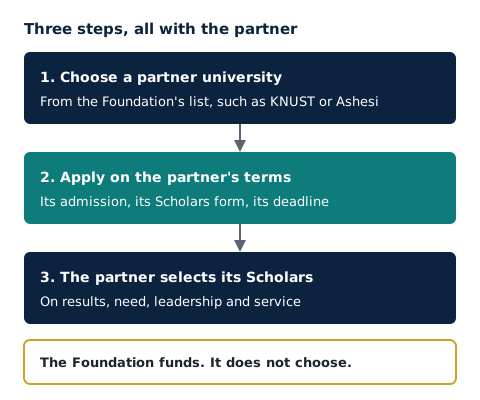
Through a partner university, not the Foundation. You choose a partner, such as KNUST, Ashesi or the University of Ghana, and apply for admission and for its Scholars Program. That university reads your application and decides. The Foundation funds the program, but it does not select you.
So there is no single Mastercard form and no single deadline. There are as many forms and deadlines as there are partners. The first job is to choose the partners you would genuinely attend.
Who is the program for?
Students who are academically strong, come from families in real financial need, and have already shown leadership and service. All three matter. A student with excellent grades from a family that can pay will not be selected, and nor will a student in need with no record of contributing to others.
Partners usually look for:
- Academic strength. Results that meet the university's admission requirements, often comfortably.
- Financial need. Evidence that your family cannot pay. Some partners describe this as "critical economic need".
- Leadership and service. What you have done for your school, family or community, and what changed because of it.
- A commitment to give back. The program expects Scholars to use their education to contribute to their communities.
For an undergraduate degree, the Foundation says applicants must be 29 or under. Several partners give priority to young women, displaced students and students with disabilities.
Which partners can a Ghanaian student apply to?
Partners in Ghana, partners elsewhere in Africa, and a few outside Africa. The Foundation's "where to apply" page lists them all. For a Ghanaian undergraduate, three Ghanaian partners are the natural place to start:
| Partner | How the application works |
|---|---|
| Ashesi University | Your admission application is also your scholarship application; families who cannot pay the full fees complete Ashesi's financial aid form with it |
| KNUST | A separate Scholars Program application alongside KNUST admission, with recent calls open from about March and running into the middle of the year |
| University of Ghana | A Scholars Program application for undergraduates, with its own deadline, recently in May |
The partner list changes as programs end and new ones begin. Some partnerships outside Africa now fund only Master's study, so check each partner's page for the level and intake before you plan around it.
What does the scholarship cover?
Usually the whole cost of study, plus support beyond money. The Foundation says the scholarship covers tuition, accommodation, books and other study materials. It also provides mentoring, counselling and leadership development. For students studying away from home, it can include a return flight.
Each partner sets its exact package. Ashesi, for example, describes housing, meals and a laptop as part of its award. Read the partner's own page for what it includes, and ask its scholarship office about anything not listed.
When are the deadlines?
They differ by partner, and many fall at a different time of year from US applications. Recent cycles give a sense of the spread:
- Ashesi has used a December deadline for admission and aid together.
- KNUST has opened its call from around March, with a deadline in the middle of the year.
- The University of Ghana set a deadline of 31 May for 2026.
Check each partner's current call, because dates move from year to year. Put every partner's date in the same calendar as your other applications, so nothing is missed.
How do I make a strong application?
Show the three things the program looks for, with evidence. The Foundation's own application tips make the same point. Each part of your application should do one job:
- Your results show you can manage the course.
- Your financial information shows, honestly and with documents, why your family cannot pay.
- Your essays show leadership and service through specific things you did, and what changed for other people as a result.
- Your recommendations come from people who have seen that work.
The give-back commitment is not a slogan to repeat. Show it through what you have already done in your community, and say plainly what you want to do next.
What is expected of me if I am selected?
More than good grades. The program is built around leadership and giving back, and Scholars are expected to take part in both while they study.
At most partners, that means three things:
- Keeping up your studies. The partner sets the academic standard, and the award continues while you meet it.
- Taking part in the program. Mentoring, leadership training and the Scholars community are part of the award, not optional extras.
- Giving back. Service in your community during your degree, and a commitment to contribute at home after it.
Before you accept, read the partner's Scholar agreement or handbook. Note what you must do each year, and what happens if you fall short. Ask the scholarship office about anything that is unclear. A Scholar who knows the terms from the start is far less likely to lose the award.
Should I apply alongside US universities?
Yes, if you would take the place. A Mastercard partner place is a funded degree, and applying to one does not stop you applying to US universities that meet full need. Many partner deadlines also fall outside the US application season, so the two can fit in the same year.
Decide in advance which offer you would take if both arrive, and talk it through with your family. Our guide to scholarships for Ghanaian students sets the Mastercard program beside the other routes.
What should I do first?
Open the Foundation's "where to apply" page and pick the partners you would genuinely attend. Write down each one's deadline and results rule. Then start your list of leadership and service, with what changed each time.
If you would like help choosing between a Mastercard partner and a US plan, you can book a call with us.
Questions people ask
How do I apply for the Mastercard Foundation scholarship?
Through a partner university, not the Foundation. Each partner runs its own application, sets its own deadline and selects its own Scholars. The Foundation's "where to apply" page lists the partners and links to each one's program page.
Which universities in Ghana are Mastercard Foundation partners?
Ashesi University, KNUST and the University of Ghana all run Mastercard Foundation Scholars programs for undergraduates. Check each one's page for the current intake, because programs and dates change.
What does the Mastercard Foundation scholarship cover?
Tuition, accommodation, books and other study materials, with mentoring, counselling and leadership development. For students studying away from home, it can include a return flight. Each partner sets the exact package.
Can I apply while waiting for my WASSCE results?
Not at every partner. KNUST's recent calls said candidates awaiting results were not eligible. Read each partner's call before you apply.
Is there an age limit?
Yes. For an undergraduate degree, the Foundation says applicants must be 29 or under when they apply.