Summer programmes for Ghanaian SHS students
A summer programme helps your application only if it shows something about you: selection, effort or a real interest followed up. Free and funded options are the best value, such as Yale Young African Scholars, which is tuition-free for African secondary students, and Yale Young Global Scholars, which gives need-based aid to international students. Expensive programmes that anyone can pay to join rarely impress admissions officers.
Do summer programmes help a Ghanaian student's US application?
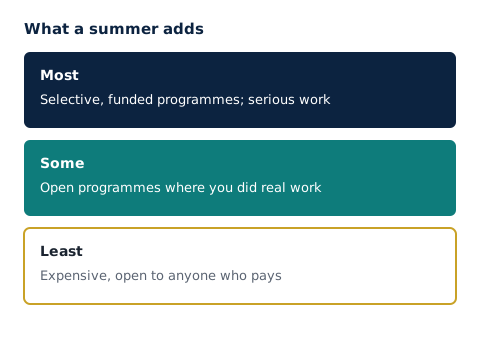
Some do, and only when they show something about you. A programme that selects students competitively, or one where you did serious work, adds to your application. A programme that anyone can join by paying, even at a famous university, says little on its own. It does not improve your chances of admission to that university.
For most Ghanaian families, the best summer programmes are free or funded. The rest of the holiday can be just as valuable, spent on work, a project or a subject you love.
Which programmes are free or funded?
Two well-known examples run by Yale, open to Ghanaian students:
| Programme | Cost | Who it is for |
|---|---|---|
| Yale Young African Scholars (YYAS) | Tuition-free; online and residential options in Africa | Secondary students in Africa, usually in SHS 1 or 2 equivalent |
| Yale Young Global Scholars (YYGS) | Tuition with need-based aid up to 100%; travel not covered | Secondary students worldwide |
YYAS is designed for African students and focuses on leadership and preparing for university. Its 2026 sessions ran in July and August, with applications closing in January. YYGS says it gives need-based aid equally to domestic and international students and met almost all aid requests in full in 2026, but you must apply for aid within the application.
Other selective, funded programmes exist, and they change from year to year. Check each one's official website, never a third-party listing alone.
What about expensive pre-college programmes?
Judge them carefully. Many US universities run summer courses that any student who pays can attend. They can be good experiences, but admissions officers know the difference between a selective programme and one with open enrolment. Attending a paid summer course at a university does not make you more likely to be admitted there.
Before paying, ask three questions. Is it selective? What will I actually do? Could the same money be better spent, for example on application fees or the CSS Profile for a funded list?
Are online programmes worth it?
They can be, and they cost far less. Yale Young African Scholars has an online option alongside its residential one, and YYGS runs an online version too. An online programme saves travel, visas and weeks away, and the work can be just as serious. Judge it the same way: is it selective, and what will you actually do?
What does a programme cost beyond tuition?
Often more than the tuition itself. A residential programme abroad means flights, a visa application, insurance, spending money and sometimes nights in a hotel before and after. A US visa can be refused, and the fees are not returned. YYGS, for example, says its aid does not cover travel.
Add every cost before you commit, and compare the total with what the same money could do in the application season. For a family that will need aid, application fees and the CSS Profile for a funded list are usually the better use.
Should parents pay for one?
Only if the family can afford it comfortably and the programme is right for your child. A summer programme is never required, and admissions officers know that many students cannot attend one. Your child's application will be read in the context of their opportunities. A holiday spent working, teaching or building something can tell a stronger story than a certificate bought abroad.
What can I do in Ghana instead?
A great deal, and it often reads better than a programme:
- Work, in a family business, a shop or an office. Responsibility and reliability show clearly.
- Teach, younger students in your community or at your old school.
- Build something: an app, a small business, a community project.
- Research, by helping a teacher or a university lecturer with a project in your subject.
- Learn, through a free online course, followed by something you make or do with what you learned.
What matters is depth and initiative. Our guide to the Common App activities list shows how these appear on the application.
When should I apply?
Months ahead, usually in the SHS 2 year. Selective programmes often close applications in the first months of the year for the following summer. Note each deadline in the same calendar you will later use for university applications. Our guide to planning from SHS 1 fits the holidays into the bigger plan.
How do I apply to a selective programme?
Much like a small university application. Most ask for school results, short essays and sometimes a recommendation. Treat the essays seriously: they are good practice for the personal statement later. Apply for any aid or travel grant at the same time, because some programmes do not allow aid requests after admission.
How do I spot a scam?
The same way as any scholarship scam. Be wary of programmes that:
- Guarantee admission to a university afterwards.
- Charge a fee to apply for a "fully funded" place.
- Are sold by agents with no link to the official programme website.
- Ask for payment by mobile money to a personal number.
Always apply through the programme's own website. Our guide to scholarship scams covers the warning signs.
How does a programme appear on my application?
In the activities list or the honours section, with a short description of what you did. If the programme was selective, say so. If it led to something, a project or a new interest, mention that too. A programme can also give you material for an essay, if it changed how you think. Do not list it more than once, and do not let it crowd out the activities you have done for years, which usually say more.
What should I do first?
Check the dates for Yale Young African Scholars and Yale Young Global Scholars on their websites, and note the deadlines. Then plan one serious thing to do next holiday, whether or not you attend a programme.
If you would like help planning the SHS years, including how to use the holidays, you can book a free call with us.
Questions people ask
Do summer programmes help with US university admission?
Some do, and only indirectly. A selective programme, or one where you did serious work, adds to your application. A programme anyone can pay to attend, even at a famous university, does not signal much on its own and does not improve your chances of admission there.
Are there free summer programmes for Ghanaian students?
Yes. Yale Young African Scholars is tuition-free for secondary students in Africa, with online and residential options. Yale Young Global Scholars gives need-based aid of up to full tuition to international students, though travel is not covered.
When should I apply for summer programmes?
Often in the SHS 2 year, months ahead. Yale Young African Scholars, for example, closed applications in January for its July and August 2026 sessions. Check each programme's dates early.
What can I do in the holidays if I cannot attend a programme?
Plenty. Work in a family business, teach younger students, build a project, follow a free online course in your subject, or help a teacher or lecturer with research. Depth and initiative matter more than a programme's name.